
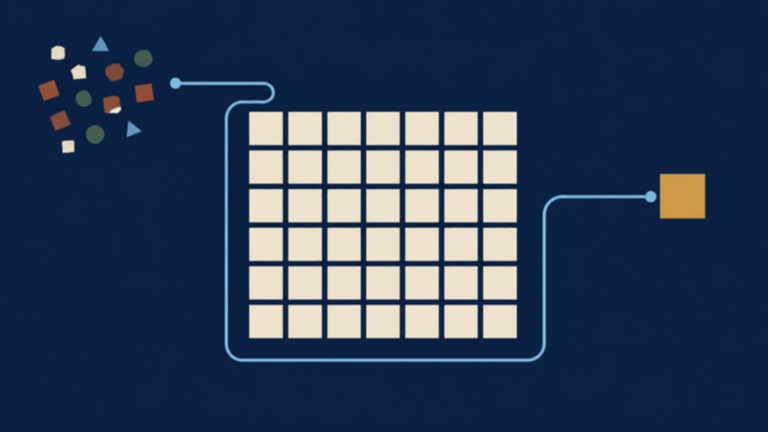
A professional faces a decision, opens an AI assistant, and has a fluent, well-organised answer within seconds. Most adopt it. One recent podcast episode calls this “cognitive surrender,” and the label is apt. People who search for how to think for yourself in this setting are usually not short of intelligence or information. The view that should have formed before the answer arrived never formed, and the answer took its place. That is a break in a specific place, and it can be named.
The Standard Advice on Thinking for Yourself With AI
The conventional guidance is sensible as far as it goes. Verify what the tool says. Treat its output as a draft and not a verdict. Work the problem on your own first so the skill does not atrophy. Set rules for when to consult it and when not to.
Each of these addresses whether the answer is right. They make a person a better auditor of the tool. But a person can audit an answer, find it correct, and still not have thought about the question. The accuracy of the output and the quality of your thinking are independent, and advice that tracks only the first leaves the second untouched.
The Philosophit Diagnosis: Believing, Not Thinking
The Philosophit method rests on a chain: clear thinking shows you your real options, seeing them makes free choosing possible, and free choosing makes energetic execution possible. Break any link and the result is a sense of inability that looks like a character flaw and is not one.
An adopted answer breaks the first link. The assistant presents one option, well argued, and a person who takes it holds a belief they did not form by examining reasons. That is believing, the default mode, and it is cheap. Thinking and choosing are not defaults. They cost energy, which is why the brain does not supply them unprompted and why a fluent answer is so easy to accept.
Repetition compounds this. A 2026 study by Wagner, Wolf and Kiebel at TU Dresden, published in Communications Psychology, found that options chosen more often are retroactively rated as better, whether or not they remain the best choice. Consult the tool by reflex for a season and the reflex starts to feel like judgement.
The prompt itself is a further problem. The question you type carries your existing beliefs and desires, and the answer comes back shaped to them. Reflecting through the same lens confirms what the lens already holds. The result is a confident answer that tells you what you were already inclined to think, in better prose.
How to Think for Yourself: What the Alternative Looks Like
The alternative is not abstaining from the tool. It is restoring the first link before the tool speaks.
State the options you see and your reasons for each, in writing, before you ask. Then consult the assistant and treat its answer as a set of reasons to be examined one at a time: accept this reason, reject that one, and say why. Where the answer proposes an option you had not seen, ask what would make it better or worse than the ones you had. Then choose, and act on the choice without reopening it.
What this produces is a decision you can explain without the tool open. You know which options were live, why you ruled out the others, and what you are committed to. The energy that goes into execution is no longer spent on an internal argument about whether the answer was really yours.
None of this installs a new habit. Clear thinking and free choosing are acts of deliberate agency, exercised in the moment, and they stay effortful. What can be built is the capacity to exercise them reliably against the pull of the default. That is the work of training.
Where to Start
If you recognise the pattern, begin with one decision this week. Write your options before you ask. Dr. Shyam has taught this distinction between governing yourself and being governed by default beliefs for decades, including through the Yoga philosophy courses at yogaphilosophy.com and the scholarship collected at shyam.org. If you would like to work on it with a coach, you can book a consultation at philosophit.com. The aim of the training is your independence, including from the coach.